Soldier of Fortune Magazine The Journal of Professional Adventurers


by Robert Fallon
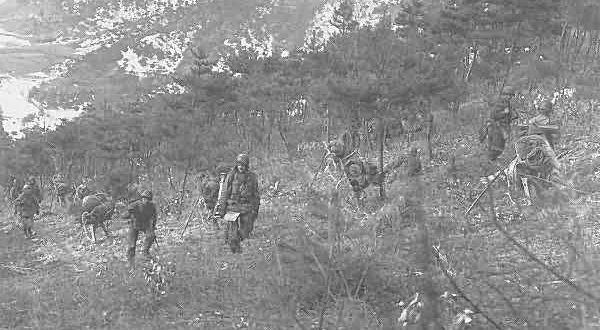
The men of Easy Company could hear the hill before they owned it. Machine guns hammered from above. Rifle fire cracked across frozen Korean ground. The Chinese troops dug into the high ground had the advantage every infantryman wants. They had elevation, cover, and clear fields of fire. The Americans below had a brutal choice: stay pinned down and bleed, or climb the hill.
Captain Lewis “Red” Millett chose the hill. He ordered his men of Company E, 2nd Battalion, 27th Infantry Regiment “Wolfhounds,” 25th Infantry Division, to fix bayonets and move forward into a fight that belonged to another era. American soldiers had carried bayonets through two world wars, but by Korea, the battlefield was dominated by artillery, aircraft, machine guns, and automatic weapons. Closing the final yards with cold steel seemed almost impossible.
READ MORE from Robert Fallon: Enemy Sappers Overran Fire Support Base Mary Ann in Vietnam
Millett did not see the bayonet as a relic. The tall, hard-driving commander believed there were moments when technology could not replace the shock of infantrymen advancing directly into an enemy position. He had fought during World War II and arrived in Korea facing a new kind of opponent: Chinese troops who moved at night, infiltrated lines, and often fought at close range.
Millett believed the enemy had come to expect American units to rely heavily on supporting fire rather than close assault. Whether the Chinese troops defending the position expected a bayonet attack or not, Easy Company was about to bring the fight directly into their lines.
The fight that followed became known as the Battle of Bayonet Hill.
The action came during a turning point in the Korean War. After Chinese forces entered the conflict, United Nations troops had been pushed south through a punishing winter campaign. General Matthew Ridgway took command of the U.S. Eighth Army and began restoring offensive momentum among troops who had endured weeks of retreat.
Operation Thunderbolt sent American forces north again, pushing into enemy-held terrain and forcing Chinese and North Korean units to give ground. Easy Company was part of that advance when Millett and his soldiers encountered a fortified enemy position on Hill 180 near Soam-ni.
A platoon came under heavy fire and stalled beneath the enemy defenses. Millett had read a translated enemy report saying U.S. troops wouldn’t engage in close combat. He used that as an element of surprise.
Millett turned to his men.
“We’re going up the hill,” he yelled. “Fix bayonets! Charge! Everyone goes with me!”
He positioned himself at the front of the assault. With his bayonet fixed, Millett started uphill. The Americans pushed upward through bullets and explosions as enemy fire swept the slope.
Millett moved among his soldiers, shouting encouragement and keeping the company moving. He understood that stopping halfway up the hill meant giving the defenders stationary targets. The assault depended on momentum, and momentum depended on men willing to keep climbing.
Grenades exploded around the advancing troops. Soldiers fired, climbed, and forced their way toward the Chinese positions. When they reached the defensive line, the battle became the kind of close combat that soldiers rarely experience and never forget.
Millett fought with his rifle and bayonet while his men pushed through the enemy position. His Medal of Honor citation later described how he led the assault while shouting encouragement and personally engaging enemy soldiers during the attack.
The Chinese defenders, who had expected to break the assault before it reached them, suddenly found American infantrymen inside their positions. Easy Company fought through the resistance and captured the hill.
American soldiers were killed and wounded during the assault, and Millett himself was struck by grenade fragments. He refused evacuation until the position was secured and his men had completed the mission.
The hill became known afterward as Bayonet Hill. The men of Easy Company earned the nickname “Cold Steel Easy.”
The assault was “the most complete bayonet charge by American troops since Cold Harbor,” military historian S.L.A. Marshall later wrote.
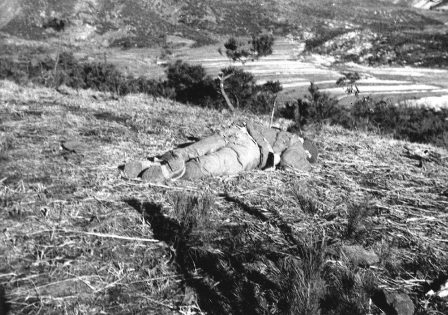
The numbers recorded after the battle showed how violent it was. Easy Company killed roughly 47 enemy soldiers, 20 by bayonet, reports say. Four Americans died taking the position.
Millett never treated the battle as his achievement alone. In later years, when attention focused on the Medal of Honor he received, he pointed instead to the soldiers who followed him up the hill. The charge succeeded because the company kept moving.
Millett’s own road to Korea sounded like something from another age. Born in Mechanic Falls, Maine, he grew up during the Depression and entered military service before America joined World War II. When the United States remained officially neutral, Millett became frustrated waiting for the war to reach him.
Determined to fight Nazi Germany, he crossed into Canada and joined the Canadian Army, serving with the Royal Regiment of Canadian Artillery. After the attack on Pearl Harbor brought the United States into the war, Millett returned and entered the U.S. Army. The move created a problem: the Army considered him absent without leave from his earlier American service.
His punishment became almost legendary in its own right. Millett was reportedly convicted of desertion, fined, and then sent back to combat. The conviction was later overturned. The young soldier who had left one army because he wanted to fight would go on to receive decorations for bravery during World War II, including the Silver Star for actions in North Africa.
By the time Millett reached Korea, he was not an officer learning about combat from manuals. He was a veteran who understood what happened when infantrymen lost confidence, and he believed aggressive leadership could determine whether a unit advanced or froze under fire.
His combat career stretched across multiple wars. He fought in World War II, led men in Korea, and later served during the Vietnam War. Korea, however, produced the action that would follow him for the rest of his life.
President Harry Truman presented Millett with the Medal of Honor in July 1951. The citation recognized his personal courage and leadership, but the story of Bayonet Hill belonged also to the soldiers who followed their commander through enemy fire and into the trenches.
Over time, the exact location of Bayonet Hill became a subject of debate. The traditional site was identified as Hill 180 near what later became Osan Air Base, where memorial events honored Millett and his company. Later researchers studying battlefield records argued that the actual assault may have occurred farther north near Anyang.
The Korean War is remembered for frozen mountains, artillery barrages, and brutal infantry battles fought across unforgiving terrain. Bayonet Hill remains one of its most unusual actions because it came down to men fighting for the last few yards of ground.
Millett survived Korea and remained a soldier. He later trained allied forces, continued his Army career, and retired as a colonel. He died in 2009, decades after the charge that became inseparable from his name.
Robert Fallon studies Korean and Vietnam War combat operations in a professional capacity.